Evaluate conversations before launch
A demo proves possibility. A test set probes whether the service behaves correctly across ordinary and adversarial cases.
Read guide ↗ TURNTAKINGREVIEW
Field 04 / Evaluation & operations
A reliable service is maintained, not simply launched. These guides connect human review, repeatable fixtures, change evaluation and incident ownership. They do not turn a small passing sample into a claim of universal safety.
The question to keep asking
Calibrate reviewers around observable behavior, not writing style.
Hold other inputs steady and examine consequential regressions.
Name the evidence required to ship and the conditions for stopping.
See the source / related interface context
Treat review and revision as parts of the conversational design system.
Open the case file ↗This source capture illustrates a related interface—not evidence that the vendor passed these review checks.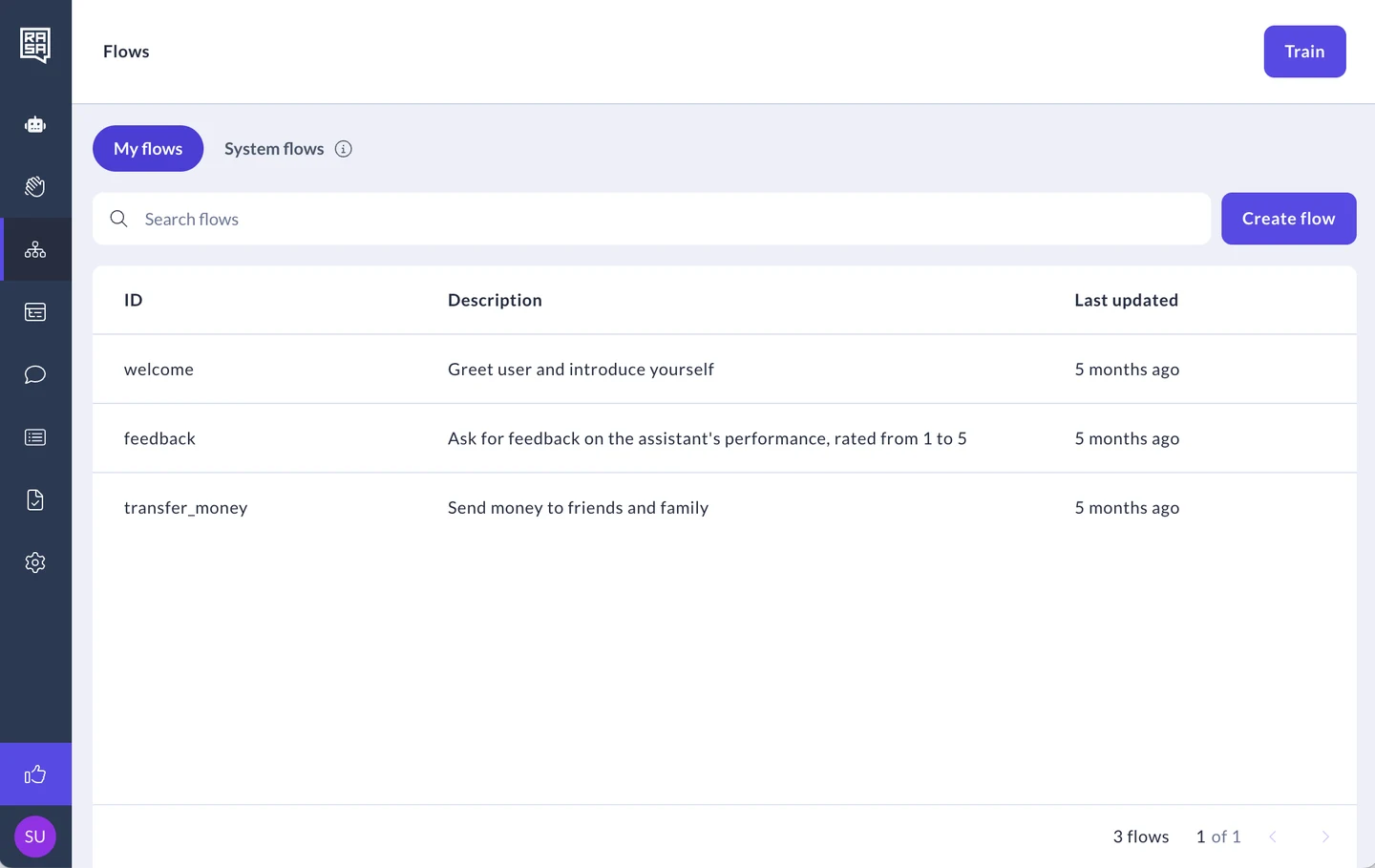
The complete evaluation & operations desk
A demo proves possibility. A test set probes whether the service behaves correctly across ordinary and adversarial cases.
Read guide ↗Log enough to diagnose behavior, then minimize, protect, sample, and expire.
Read guide ↗Every extra model, retrieval call, voice step, and tool adds time, failure probability, and spend.
Read guide ↗Containment is not success when the customer gives up, repeats the task, or fixes the problem elsewhere.
Read guide ↗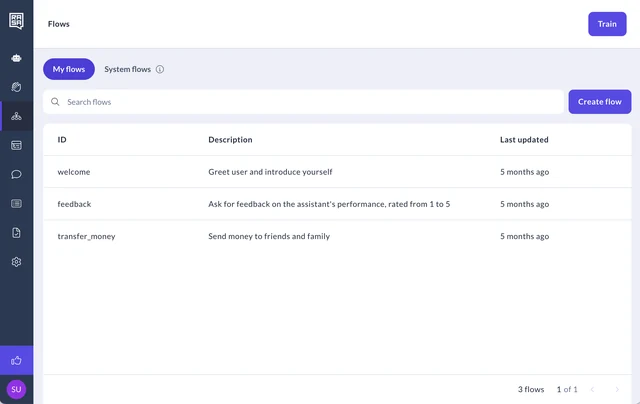 Rasa · source visual / reviewEvaluation & operations3 min
How to preserve the meaningful shape of a failed conversation, replay it safely, and assert behavior without pretending language systems are deterministic everywhere.
Read guide ↗A practical contract for external work that outlasts one turn, with status language users can inspect and cancellation semantics engineers can keep honest.
Read guide ↗A human review rubric can make task correctness, evidence, action safety, and repair quality discussable—and calibration can expose where the policy itself is vague.
Read guide ↗A release package should say exactly what changed, what will be observed, who can stop it, and how to return to a known safe configuration without inventing a universal threshold.
Read guide ↗When a model, configuration, or system prompt changes, hold the other inputs steady, compare paired cases, and inspect the slices that can be harmed by an average improvement.
Read guide ↗When automation may have changed the wrong thing, prioritize stopping further impact and verifying authoritative state before attempting any broad undo.
Read guide ↗A multilingual conversational system needs locale, direction, rendering, and review fixtures that make language-specific failures visible before release.
Read guide ↗A timestamped trace separates observed critical-path delay from an illustrative serial budget before a team tries to optimize a conversational wait.
Read guide ↗Authenticate and record a delivery once, then reconcile the business record that delivery describes instead of treating delivery mechanics as proof of state.
Read guide ↗Give each request a deadline, one retry owner, and a finite retry allowance so nested clients do not amplify a transient fault into a wider outage.
Read guide ↗Release grounded answers only after testing questions that should remain unanswered, conflicted, or unsupported. This field note supplies an inspectable artifact, counterexample, and release checks.
Read guide ↗Create clearly fictional, nonidentifying fixtures while measuring what their construction fails to represent. This field note supplies an inspectable artifact, counterexample, and release checks.
Read guide ↗Keep the system connected
Knowledge & actions Handoff & service Put the reading to work