
Embodied systems · Explore this field ↗ · Implementation · 4 min read
Portable VRM avatar contracts: move the character without losing the rights
A delivery contract for a portable avatar that keeps rig assumptions, expressive controls, provenance, and permitted uses inspectable.
See the source / a related case
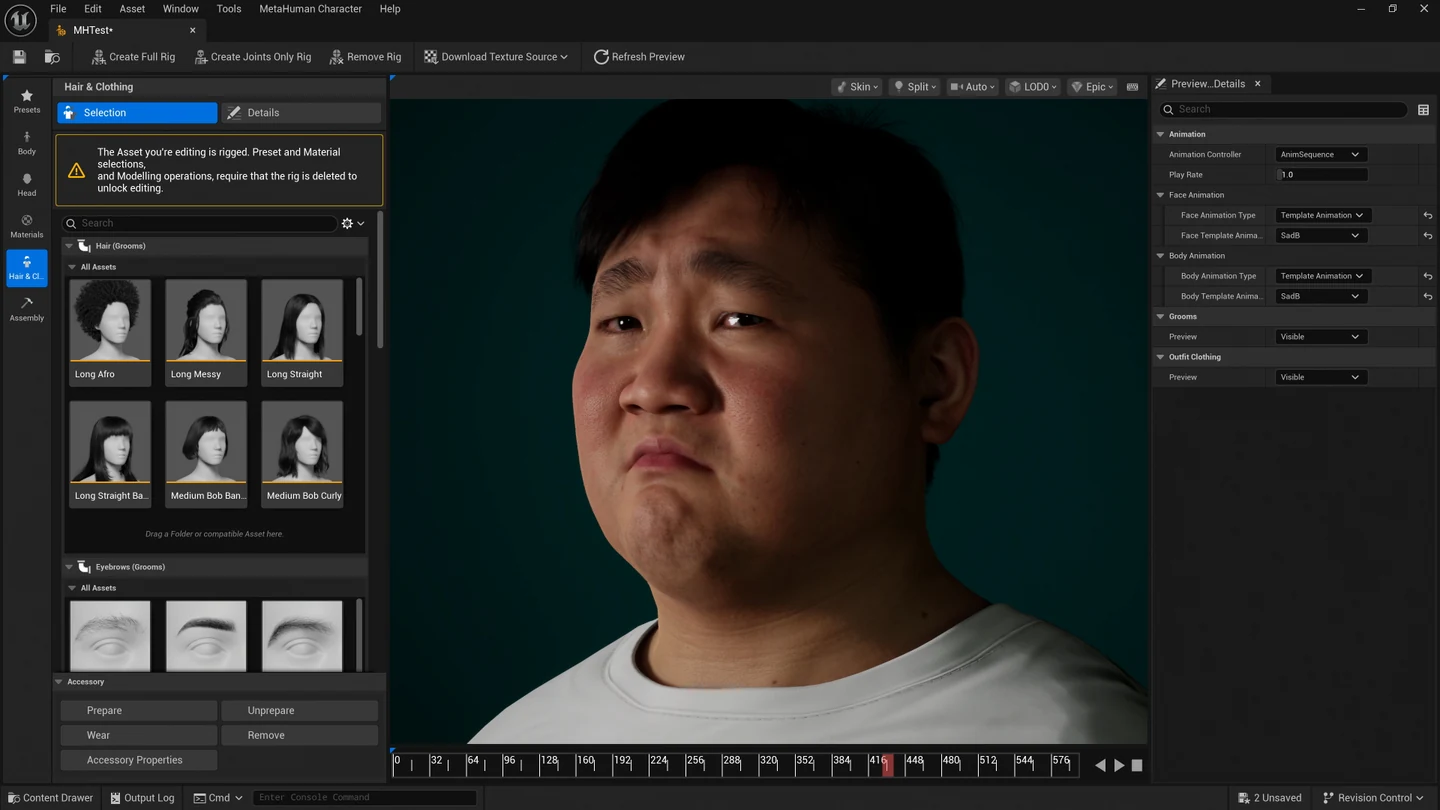
Related authoring context, not a VRM export demonstration. This screenshot does not establish MetaHuman–VRM compatibility.
The face is only one layer. · Read the case file ↗A file format is not the whole agreement
VRM is useful because it packages a humanoid avatar on glTF conventions with interoperable metadata, rather than requiring every runtime to reverse-engineer a custom character. That portability is valuable for a prototype that needs to move between a renderer, a motion-capture test and a conversational scene. It does not turn the file into a complete production contract. A project also needs the actual delivery version, export settings, rig and expression mapping, source-asset inventory, dependencies, and the commercial terms agreed with the creator. Keep those records together under a version identifier. If a runtime can load the file but cannot reproduce the intended expressions or uses a different coordinate convention, record that as an implementation mismatch rather than silently repairing it in a later scene.
Read the VRM metadata before casting
The VRM 1.0 metadata specification defines fields for authors, copyright information, references, third-party licenses and a license URL. It also carries use settings such as avatar permission, commercial usage, credit notation, redistribution and modification. These values are practical intake questions: who may perform with this model, is commercial use within the stated setting, must credit appear, and may an adapted file be passed onward? Defaults matter. The specification lists restrictive defaults for several fields, so a missing affirmative field is not a broad permission. Capture the metadata exactly as delivered, but do not let a JSON field replace a signed or otherwise authoritative agreement where the work involves a real performer, commissioned likeness, trademark, music, scan, or other rights outside the model file.
Make the handoff testable
Define the portable package in layers. The first layer is the immutable delivered VRM and its checksum. The second is a runtime compatibility sheet: VRM version, tested loader versions, required humanoid bones, expression presets, spring-bone or collider dependencies, material behavior and any known unsupported features. The third is a performance sheet that maps speech and behavior intents to the avatar’s actual expression and motion controls. The fourth is a rights sheet: creator, commissioned scope, attribution wording, geographical and term limits, modification and redistribution permission, and an escalation contact. A receiving team should be able to run a small acceptance scene—idle, gaze shift, standard expressions, a gesture, and a recorded spoken line—without opening the authoring tool.
Separate runtime permission from source access
A delivery may authorize running the avatar in a product while prohibiting redistribution of the VRM itself. That is a meaningful difference for browser delivery, downloadable worlds, creator tooling, and vendor handoffs. Likewise, a team may be permitted to animate a model without permission to make it appear to speak as a named person. The VRM Public License describes model use, avatar use and modification conditions, but a project may carry other terms through the license settings or a separate agreement. Treat every proposed distribution route as a new review: streamed pixels, encrypted local asset, public downloadable file, derivative avatar, promotional still, and training input do not necessarily receive the same answer.
Acceptance is an operating practice
Run an intake review before the avatar reaches the dialogue stack. Validate schema and loader compatibility, preserve a rendering capture for the delivered version, and log the chosen fallback if the file cannot be shown. Require a change request when a rigger changes blendshapes, a producer changes credits, or a vendor requests the raw package. At release, show any required credit where the contract requires it and retain the evidence behind the public claim. This deliberately makes the glamorous asset ordinary operational data: versioned, attributable, replaceable, and auditable.
What this guide does not decide
VRM metadata can express useful settings, but it is not legal advice or a universal rights-clearing mechanism. It cannot prove that a contributor had authority to license every texture, voice, scan, or reference embodied in the file. It also does not determine consumer-protection, privacy, labor, publicity, or jurisdiction-specific obligations. Bring counsel or the rights owner into those decisions, especially for a recognizable human likeness or a character intended to represent a real organization.
Primary reading
Sources and limits
These links support the architecture, policy, or product behavior discussed above. Vendor documentation describes vendor features; it is not independent proof of performance. Current details should be rechecked before a production decision.